ASME Pressure Vessel Design Using ANSYS
A Practical FEA & Design-by-Analysis Program
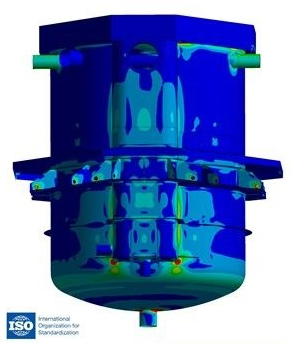
This ongoing course is a comprehensive, industry-focused training program designed to equip engineers with the practical skills required to perform ASME-compliant pressure vessel design and advanced finite element analysis (FEA) using ANSYS Mechanical Workbench.
The program goes beyond theory and focuses on real-world engineering application, covering Design-by-Analysis (DBA) as per ASME Section VIII Division 2, advanced integrity assessments, and fitness-for-service evaluations widely used in the pressure equipment industry.
Through a hybrid learning approach, participants gain access to structured self-paced video content along with live interactive online sessions that emphasize problem-solving, walkthroughs, and project-based learning.
Course Curriculum – In-Depth Module Overview
This program is structured to progressively build competence from core FEA fundamentals to advanced ASME Design-by-Analysis (DBA) and real-world integrity assessments, ensuring participants gain both theoretical clarity and hands-on expertise using ANSYS Mechanical.
Module 1: FEA Fundamentals for Pressure Equipment
This module establishes a strong simulation foundation tailored specifically for pressure vessels and pressure-retaining components. Participants learn how to model complex geometries accurately and apply realistic loading conditions as followed in industry practice.
Key focus areas include:
Selection and application of link, beam, shell, and solid elements for vessel shells, heads, nozzles, and attachments
Advanced meshing strategies for thin-walled structures, nozzle intersections, weld regions, fillets, and
stress concentration zones
Correct definition of boundary conditions, internal pressure, thermal loads, and support conditions
Bolt strength assessment, including pretension application, stress evaluation, and fatigue considerations
Weld assessment techniques, including stress linearization, hot-spot stress methods, and interpretation of results as per code requirements
Lifting lug and attachment analysis, covering both permanent and temporary lifting conditions
Contact modeling and leak assessment, focusing on gasket behavior and seal integrity
Introduction to material, geometric, and contact nonlinearities, including elastic–plastic behavior
Evaluation of wind and seismic loads using static equivalent methods
By the end of this module, participants will be capable of creating robust, code-ready FEA models suitable for downstream ASME assessments.
Module 2: ASME Section VIII Division 2 – Design-by-Analysis (DBA)
This core module focuses on the mandatory ASME VIII Div. 2 failure protection checks, providing a step-by-step understanding of code philosophy and its practical implementation using ANSYS.
Participants will gain hands-on experience in:
Understanding the Design-by-Rule vs Design-by-Analysis approach and when DBA is required
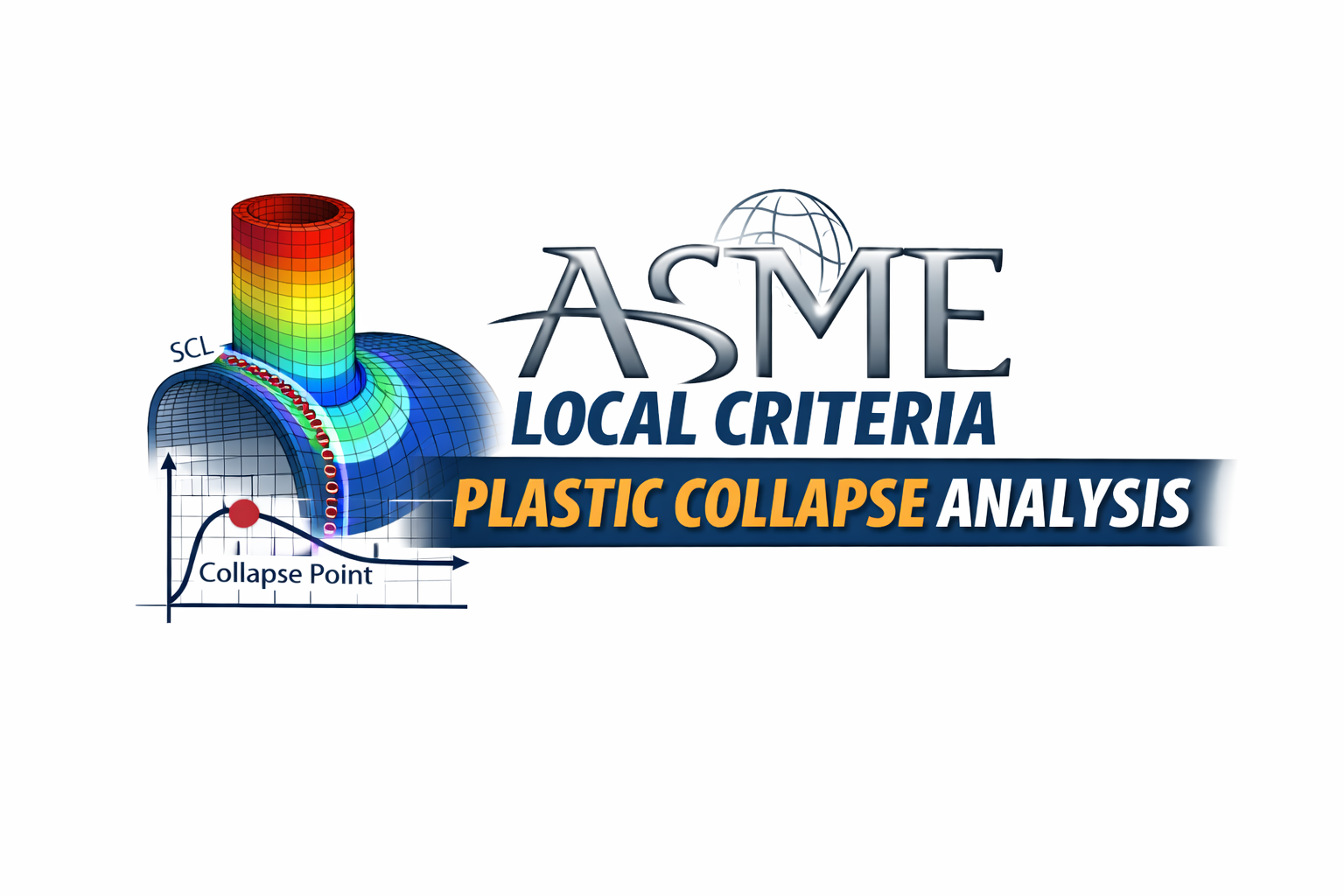
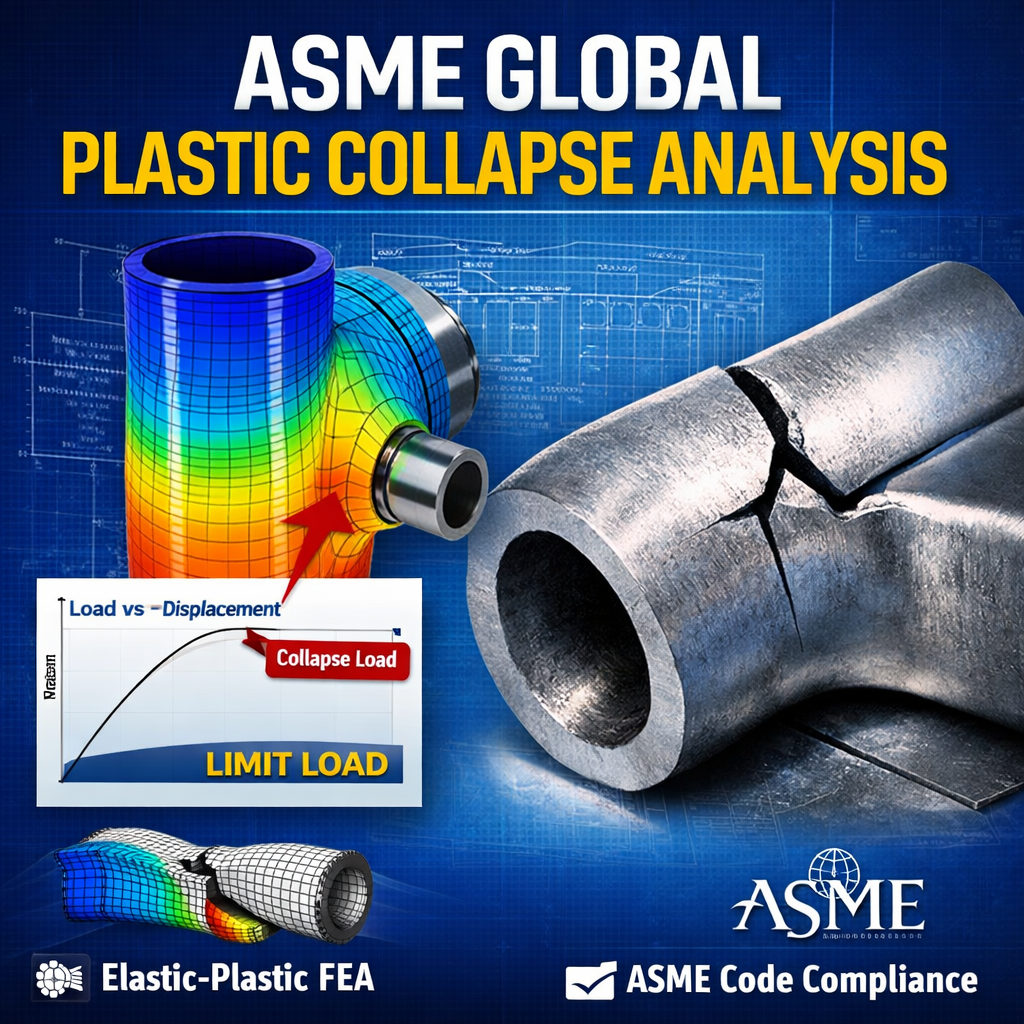
Protection against plastic collapse using:
Elastic stress analysis
Limit load analysis
Elastic–plastic analysis
Protection against local failure, including strain and stress-based criteria
Buckling assessments, covering both elastic and elastic–plastic buckling approaches
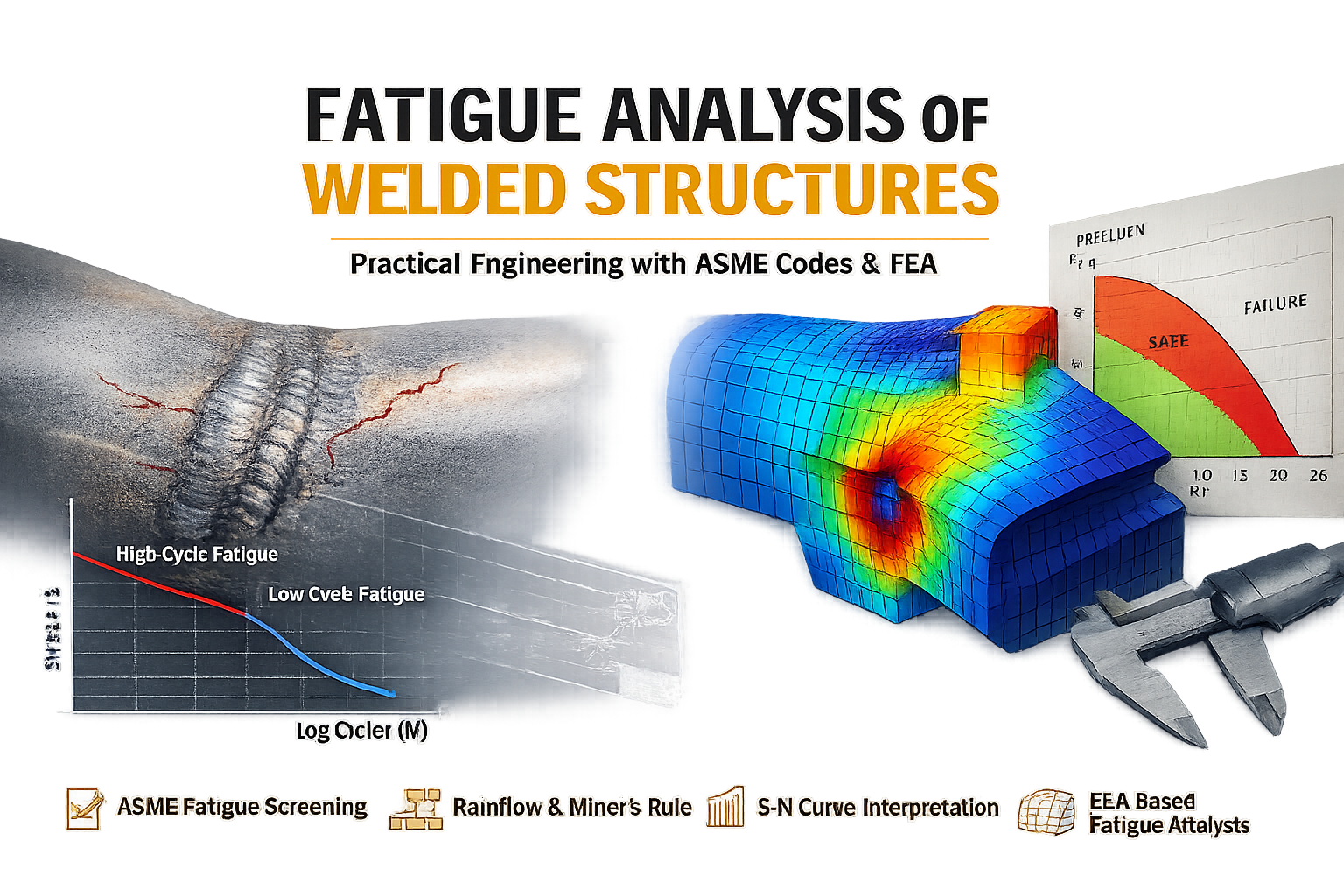
Fatigue and cyclic loading evaluations, including:
Thermal ratcheting analysis, using both elastic and elastic–plastic methods
Each topic is reinforced with worked example problems, ensuring participants understand not just how to perform the analysis, but also why each check is required as per ASME code.
Module 3: Advanced Integrity & Fitness-for-Service Assessments
This module addresses real-life operational challenges, including damage, degradation, and high-temperature service conditions commonly encountered in industry.
Key learning outcomes include:
High-temperature creep assessment, including material modeling and remaining life estimation
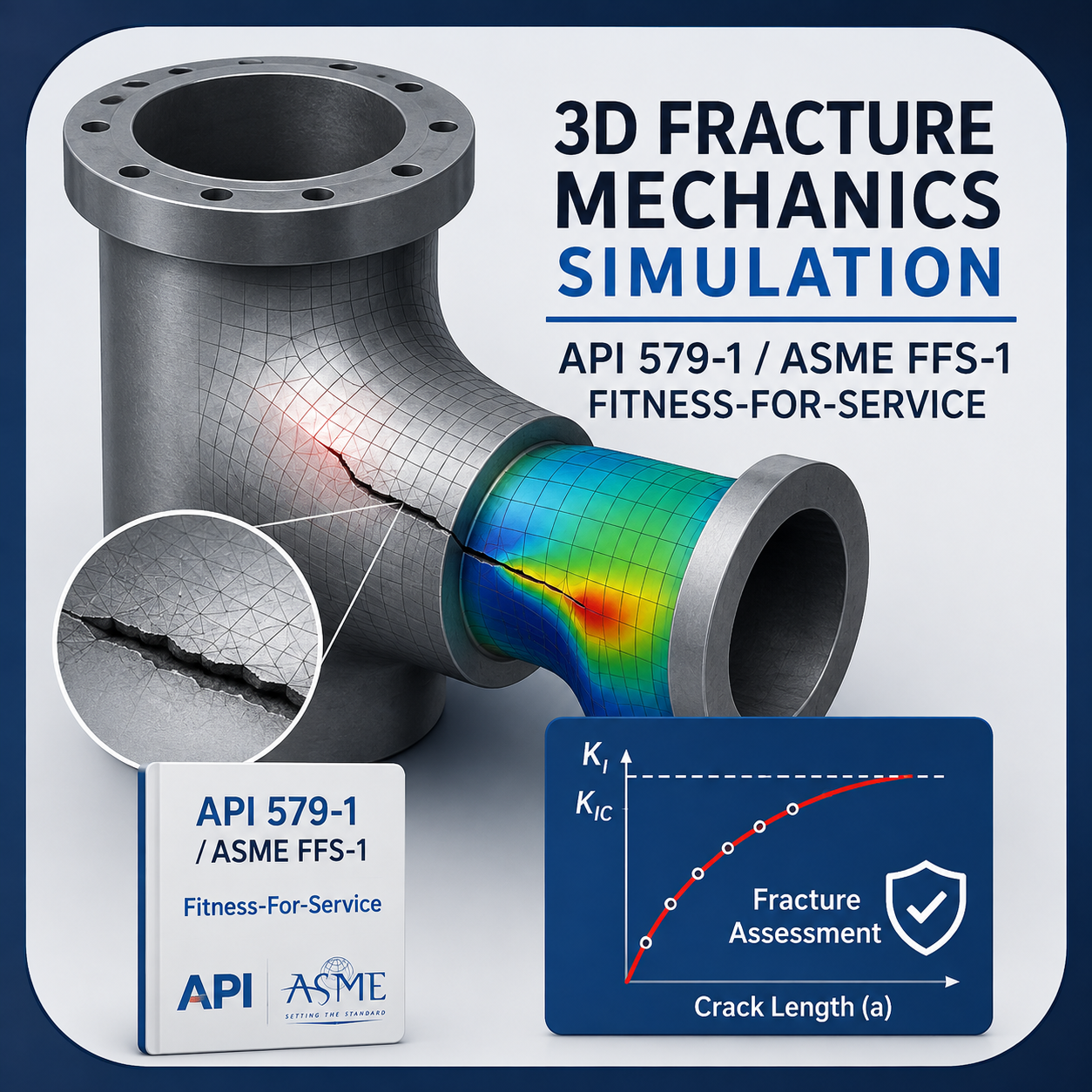
Introduction to Fitness-for-Service (FFS) methodology as per API 579
Construction and application of Failure Assessment Diagrams (FAD) for flaw tolerance evaluation
Practical application of ASME Part 4 and Part 7 requirements, including:
Welded joint design and NDE requirements
Nozzle reinforcement and local load evaluation
Component design under combined loading conditions
Interpretation of examination groups and inspection requirements
This module equips participants to assess existing and aging pressure equipment, a highly valued skill in oil & gas and process industries.
Module 4: Capstone Project – Industry-Scale Pressure Vessel Analysis
The capstone project integrates all concepts learned throughout the course into a single comprehensive industrial case study.
Participants will:
Perform a complete Design-by-Analysis of an industrial pressure vessel (e.g., horizontal vessel with saddles)
Apply all mandatory ASME VIII Div. 2 checks
Conduct advanced assessments such as fatigue, buckling, and nonlinear analysis
Prepare a professional engineering report, closely matching real industry submission standards
This project ensures participants graduate with practical confidence and job-ready expertise.
Learning Outcomes
By the end of this program, participants will be able to:
Build accurate, industry-grade FEA models for pressure vessels and pressure-retaining components using ANSYS
Select appropriate elements, meshing strategies, and nonlinear solution methods for complex pressure equipment
Apply ASME Section VIII Division 2 Design-by-Analysis (DBA) procedures confidently and correctly
Perform mandatory failure protection checks including plastic collapse, local failure, buckling, fatigue, and ratcheting
Conduct elastic, limit-load, and elastic–plastic analyses in compliance with ASME code requirements
Evaluate bolt, weld, nozzle, gasket, and attachment integrity using advanced FEA techniques
Perform fatigue life prediction, thermal ratcheting, and creep assessment for cyclic and high-temperature service
Apply Fitness-for-Service (FFS) methodologies as per API 579, including Failure Assessment Diagram (FAD) evaluation
Interpret simulation results and prepare professional, code-compliant engineering reports
Handle real industrial pressure vessel projects independently with confidence
Tools & Software Covered
Participants will gain hands-on experience with industry-standard tools widely used in pressure equipment and CAE roles:
ANSYS Mechanical Workbench
ANSYS Meshing
Post-processing & Code Evaluation Techniques
ASME & Industry Standards (Applied Practically)
ASME Section VIII Division 2
ASME Part 4 & Part 5 requirements
API 579 – Fitness-for-Service
Note: The course focuses on practical application of codes through FEA, not just theoretical interpretation.
Certification
Upon successful completion of the course and capstone project, participants will receive:
Certificate of Completion – ASME Pressure Vessel Design Using ANSYS
This certification validates:
Practical competency in ANSYS-based pressure vessel analysis
Understanding and application of ASME VIII Div. 2 Design-by-Analysis procedures
Ability to perform advanced integrity and Fitness-for-Service assessments
The certificate can be:
Added to your resume and LinkedIn profile
Used as proof of job-ready CAE/FEA skill development
Beneficial for roles in pressure vessel design, CAE, oil & gas, process, and heavy engineering industry.
Write a public review